
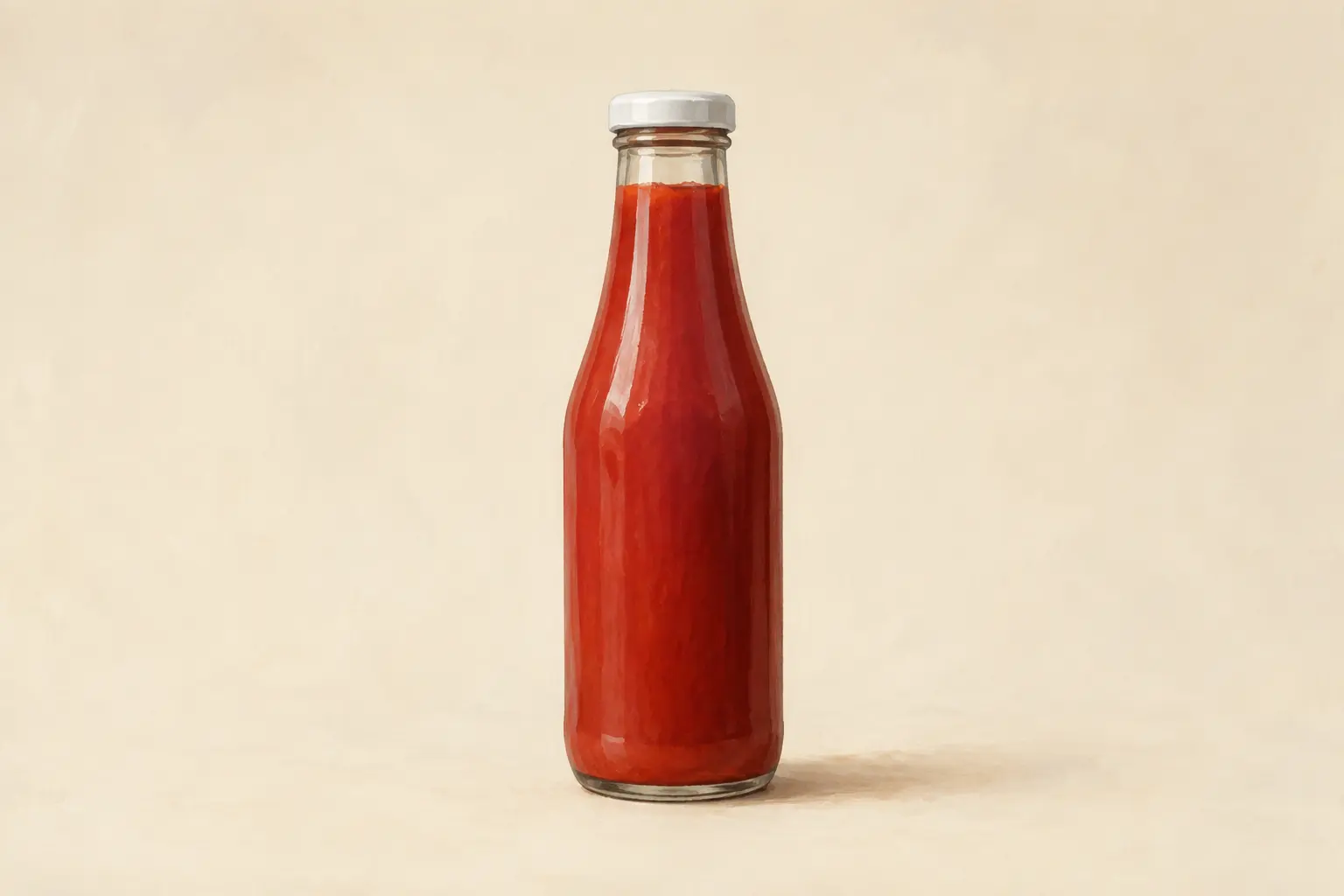
Ketchup has become a little embarrassing.
It is the condiment people believe they are supposed to graduate from. As our tastes become more serious, ketchup is displaced by sriracha, fermented hot sauces, chilli crisp and various things suspended in mayonnaise. The bottle retreats further into the refrigerator. The little sachets pushed into takeaway bags collect in a drawer until someone finally throws them out.
The strange thing is that none of this has made ketchup less delicious.
Only less fashionable.
Ketchup is often one of the first condiments we learn to love. Its flavour is immediately legible: tomato, vinegar, sugar and salt. There is no burn to build toward, no funk to decipher and no provenance to recite before eating it. It asks very little of you.
Perhaps that is why we eventually begin asking so little of it.
In an Indian kitchen, ketchup occupies a peculiar place. It is not essential enough to be considered part of the cuisine, yet it has attached itself so perfectly to certain foods that removing it feels unnecessarily principled.
A masala omelette is one of them. The eggs are rich, the onions sweet, the green chillies sharp. Ketchup arrives with acidity and sugar, softening one edge while sharpening another. The same is true of anda pulao: spiced rice, fried egg and a cold streak of ketchup create a combination that should feel unsophisticated but tastes complete.
Then there are fries.
McDonald’s fries dipped in ketchup are the best kind of comfort. They are salt, fat, sweetness and acidity working with the efficiency of something refined through endless repetition. The deep corporate tinkering over years to perfectly pair the ketchup and fry down to the last molecule makes it so addictive. You can dip the fries into a McFlurry if you want—and perhaps enjoy the novelty—but ketchup remains the pairing that requires no explanation.
Not every food needs ketchup. That is important.
Ketchup can be loud. It can flatten delicate flavours and make unrelated foods taste suspiciously alike. Its proper defence is not that we should put it on everything, but that the things which genuinely need ketchup rarely benefit from receiving something cleverer instead.
Novel condiments can become a performance of taste. The small-batch hot sauce, the obscure chilli paste and the house-made aioli all tell a story about the person choosing them. Ketchup tells no such story. It is too common, too industrial and too deeply associated with children’s menus to make anyone look interesting.
That anonymity is part of its comfort.
Helen Rosner once wrote about chicken tenders as relief from the constant performance surrounding food—a simple pleasure that asks nothing and says nothing about the person eating it. Ketchup offers a similar escape. You do not need to discover it. You do not need to develop an appreciation for it. You already know exactly what it tastes like.
Over time, the ketchup bottle in my pantry has only become larger.
After trying hotter sauces, sharper sauces, fermented sauces and sauces built from ingredients I once had to search for, I returned to ketchup with a better understanding of what it is for. Not complexity. Not novelty. Recognition.
Sometimes deliciousness is not something waiting to be discovered.
Sometimes it has been sitting in the refrigerator door the entire time.