My hot take, as a professional eater and a professional cooker:
Stop ordering garlic naan with your curries.
Now, garlic naan is a lovely thing to eat by itself. I would order it as an appetizer if restaurants would just give it ten percent more oomph—mostly by adding a little salt on top.
Garlic naan is possibly the worst vehicle for gravy.
Its flavour is loud before the food even arrives. By the time the curry hits the table, you have already committed to a double-fat, double-garlic situation you did not need.
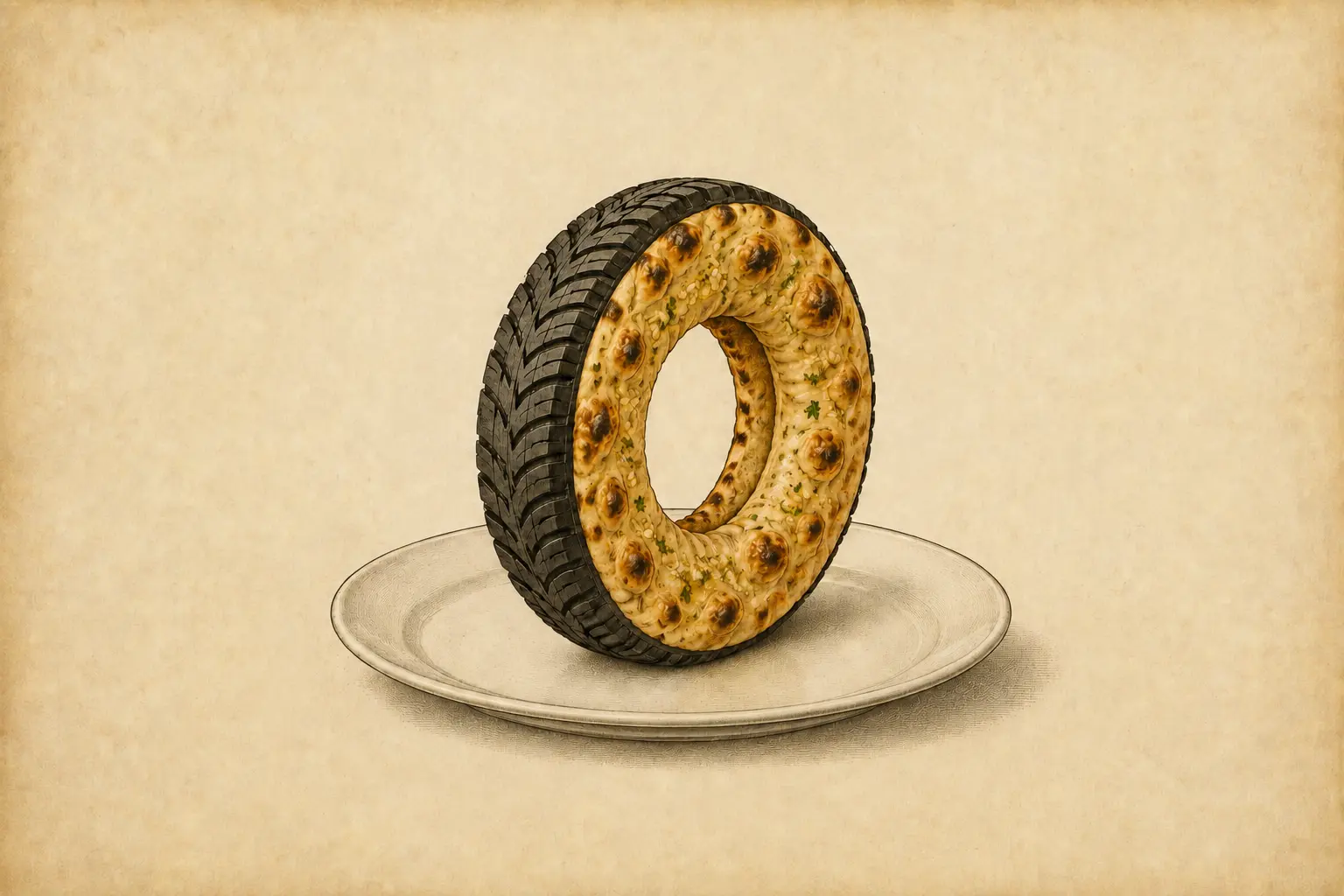
One piece is so oversized that restaurants have to cut it in two. By the time you reach the end, it has gone cold, rubbery and oddly reminiscent of chewing on a Michelin tyre.
What you get is a double whammy: garlicky, buttered refined-flour dough colliding with a meaty curry already rich with fat and ghee. Instead of balance, you get excess. Instead of pleasure, you get heaviness.
Bloated. Groggy. That post-meal fog that makes you question your life choices.
Curries and gravies do not need competition. They need restraint.
The best vehicle is roti—the plainer, the better. Tandoori roti. Rumali roti. And, in a perfect world, khamiri roti, if the restaurant knows what it is doing.
A good khamiri roti is quietly brilliant. Built on slow, long fermentation, it has a gentle tang and a spongy, absorbent crumb that soaks up gravy without collapsing.
It has enough structural integrity to cradle a piece of meat and scoop up gravy in one confident motion—no tearing, no sogginess, no mess. Just a clean flight path from plate to mouth.
Bread, in this context, is not the star. It is the vessel. The conduit. The supporting actor that knows when to step back and let the curry speak.
Order less theatrics. Choose better engineering.