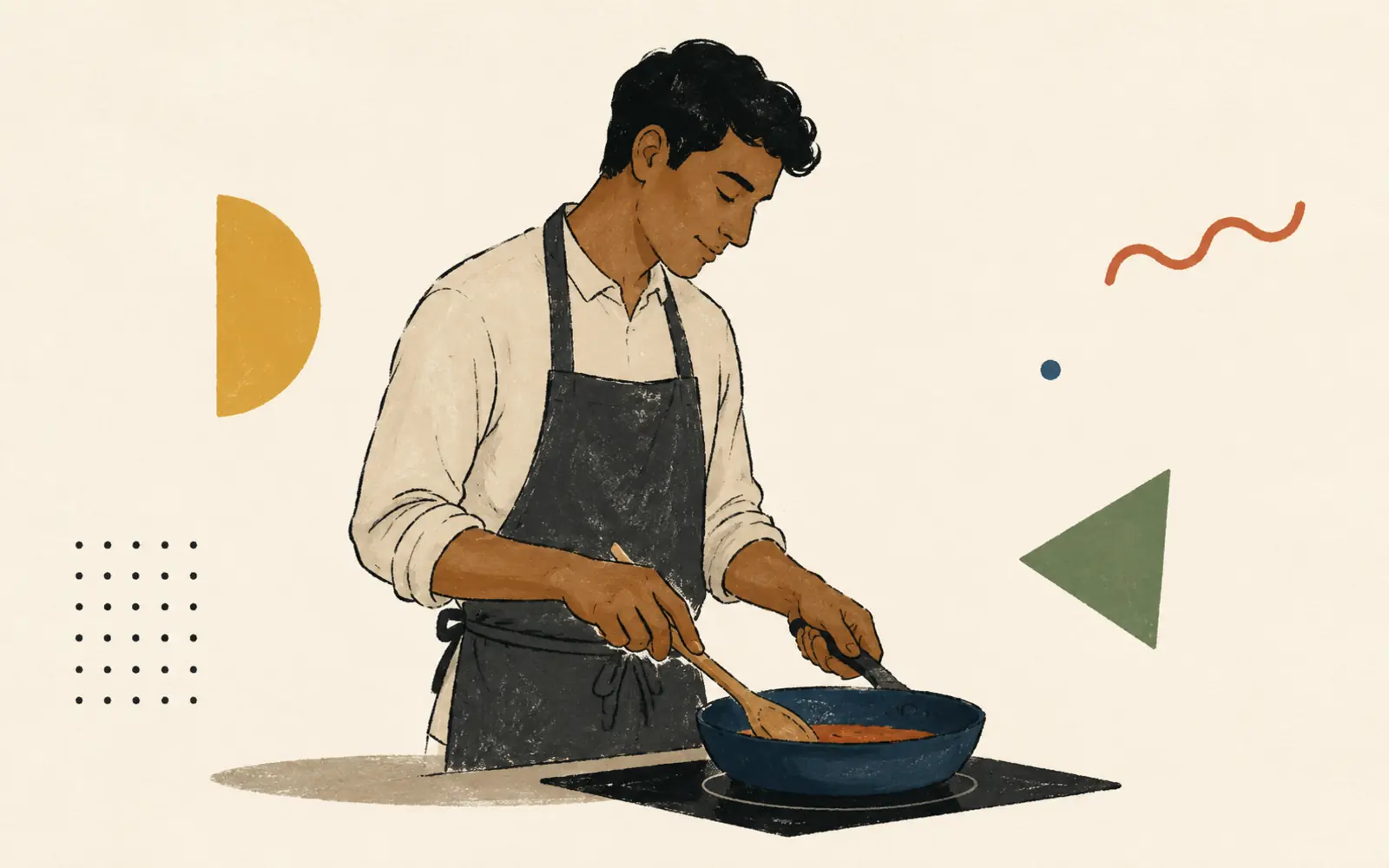
Cooking for one is when I take myself seriously.
Not in the performative way—no linen tablecloths, no plating tweezers—but in the quiet, almost devotional way. It is when the kitchen becomes a place of intention rather than responsibility. When I am not cooking at someone or for someone, but with myself in mind. My hunger. My curiosity. My patience.
Cooking for others has always made me attentive, almost hyper-aware. I think about their tastes first: what they like, what they do not. How hungry they are. What they expect of me. I cook to reassure, to comfort, to meet a standard I have unconsciously set for myself.
It is generous, but it is also bounded. There are rules, even if they are unspoken.
In Canada, as the designated roommate-who-cooks, those boundaries were clear. The food had to feel Indian enough to belong. Palatable. Comforting. Familiar.
I pushed where I could—turned butter chicken koftas into a pizza topping, bent recipes just enough to feel clever—but there was always a perimeter I could not cross. The food still had to land softly in an Indian household. It had to make sense to someone else’s stomach.
Cooking for myself dissolves that perimeter.
It gives me permission to be strange, specific and deeply indulgent. I can reach for fish sauce without explaining myself. I can throw in caperberries knowing no one will push them aside. I can chase flavours that feel too sharp, too quiet, too me for a shared table. There is no need to negotiate.
It also lets me practise things I could never cook in a restaurant and would never cook for another hungry Indian. A Dover sole, for instance—delicate, precise, almost monastic in its demands. Food that asks for restraint instead of generosity. Food that does not want to be shared loudly, but eaten attentively.
When I know I will have time alone in the kitchen—truly alone—I plan for it the way some people plan holidays.
I will think about the meal for days. I will pace it in my head. I will imagine textures before flavours. I will buy groceries in stages through the day, letting the idea mature as I go: this first, then that, then maybe one last thing I had not thought of until the afternoon light shifted.
There is no rush when I cook for myself. No fear of someone waiting. No pressure to fill plates quickly.
I move slower, but I am more exacting. I taste more. I correct more. I allow myself to fail and try again because the only person affected is also the most forgiving.
Cooking for one has made me more creative, but more importantly, more honest.
It is where I cook not to be liked, but to be understood by myself.
And in that solitude, I do not cook less. I cook better.