
One thing I have concluded over years of writing is that the first ten pages you put down after a hiatus will be absolute shit—filled with all the backlog your mind has been brewing while you were away.
After typing and backspacing through more than five thousand words, this is possibly the sixth rendition of the ninth version of this article.
There are enough individual stories, and enough people who made my life unbelievably wonderful, that calling Oviinbyrd one of the best places I have ever worked feels like an understatement.
At Oviinbyrd, a golf club in Muskoka, I worked garde manger. Come service, I plated intricate salades composées, often with the freedom to arrange them as I pleased. In practice, the position also meant handling almost every piece of produce that lived in and around the kitchen—especially the cold things: berries, fruit and seemingly twenty different varieties of heirloom tomatoes.
Everything passed through my hands at least once during its life cycle.
This was partly my responsibility and partly my incurable need to taste, touch, feel and smell everything that entered the kitchen.
Chef Nigel knew this well. He would challenge me to identify whatever came in, whether it arrived through Sysco or Bondi, or was driven up from Toronto by his wife. He also kept an eye on my bus bin because he knew I would have adopted something new and carried it back to my station to fiddle with—perhaps a few baby heirloom tomatoes waiting to find their place on a salad.
I love good produce, especially when it is fresh and at the height of its season. I also love the variety.
Reading had given me an abstract familiarity with ingredients. I might know how burdock should feel and taste, how it should be processed, which cuisines use it and what could be made from it. But actually holding it, understanding its texture, working with it and turning it into something exceptional filled me with unbound excitement.
Whenever something new arrived, Chef Nigel would look at me and say, “You look like a giddy little boy.”
And indeed, I was.
Produce became central to my education at the Byrd. The books I had read about ingredients, handling, cooking and kitchen technique were suddenly laid open in front of me—not as illustrations, but as physical things I could pick up and work with.
I was learning under a chef who had cooked in places I had only read about and worked shoulder to shoulder with some of the best in the world.
One of my favourite lessons arrived while I was cleaning the deli slicer.
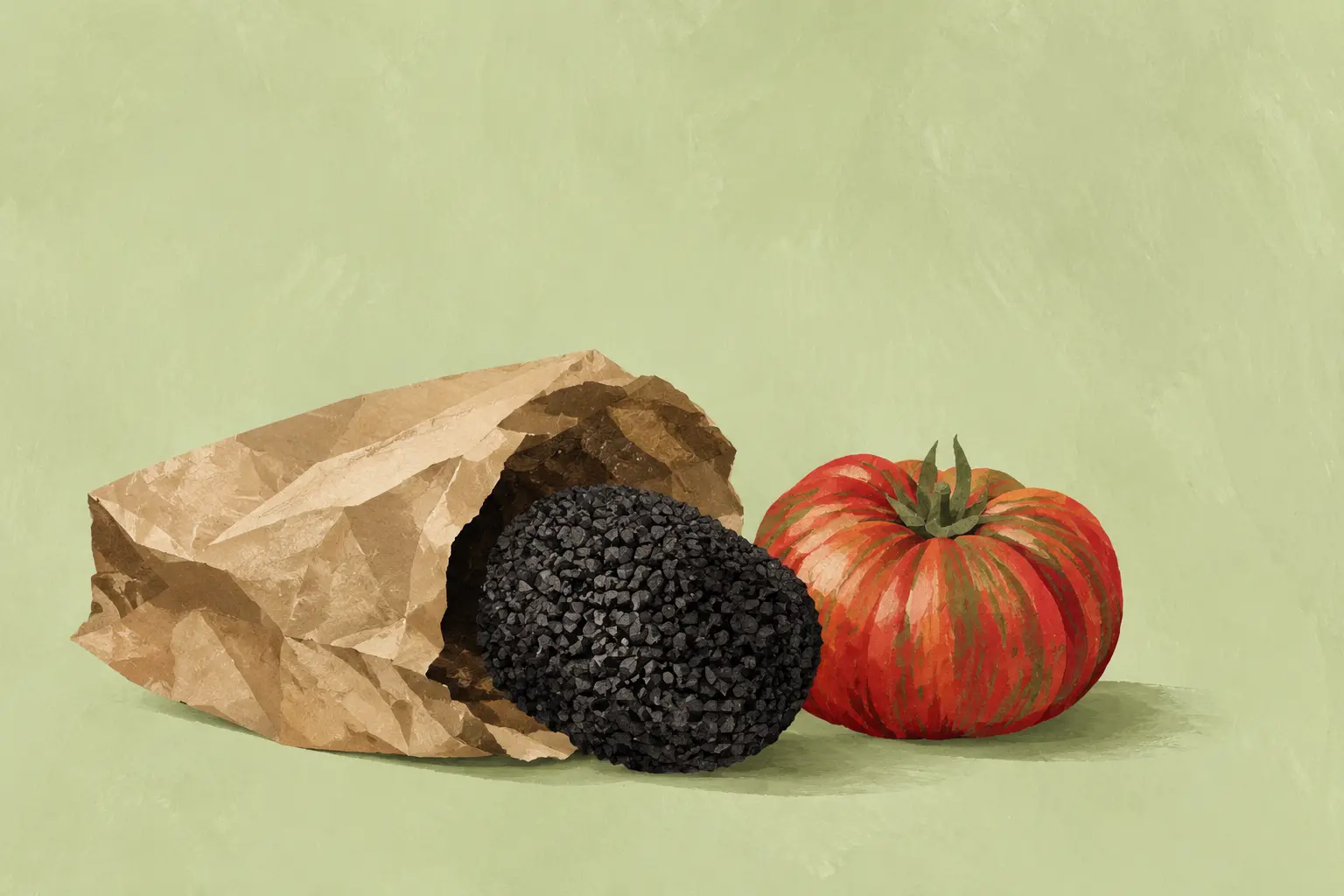
Fresh boxes of mushrooms had just come in. Chanterelles, morels, hen of the woods—beautiful things, all smelling delicious. Chef walked over holding a brown paper bag.
“Put your hand in there.”
I tried to peek inside.
He pulled the bag away.
“Just put your hand in there.”
“What’s in there?”
I reached in, hoping it was not petrified dog shit.
My hand found something rough. I pulled it out and discovered a giant black truffle.
It was not how I had imagined my first encounter with a hunk of truffle.
What made it better was that Chef handed me the new truffle slicer our sous-chef, Jeff, had bought for the kitchen and asked whether I wanted to shave the truffle over a dish.
Whatever little nub remained at the end went onto my breakfast sandwich.
For years, I had known ingredients as information. At Oviinbyrd, they became texture, aroma, weight, season and possibility.
That may be the greatest education a kitchen can offer: it places the thing in your hands and trusts your curiosity to do the rest.