
Ghee is not clarified butter. Like a lot of Indian ingredients, it is often mislabelled or conveniently replaced in recipes.
I’ve melted hundreds of kilos of butter in a bain-marie over the years. I know what clarified butter is. I know how it behaves in a pan, how it smells when it’s just right, and how flat it feels when it isn’t. And I’m telling you: they are not the same thing.
It’s not as if I haven’t voiced enough frustrations about food influencers, but it absolutely grinds my gears to watch recipes for “ghee” that simply cook butter until the milk solids caramelise and turn brown.
That’s not ghee. That’s beurre noisette.
I have tried swapping clarified butter into biryani in place of ghee, and it takes away half the essence of the dish. It doesn’t build flavour. It just sits there, doing a job ghee does with intent.
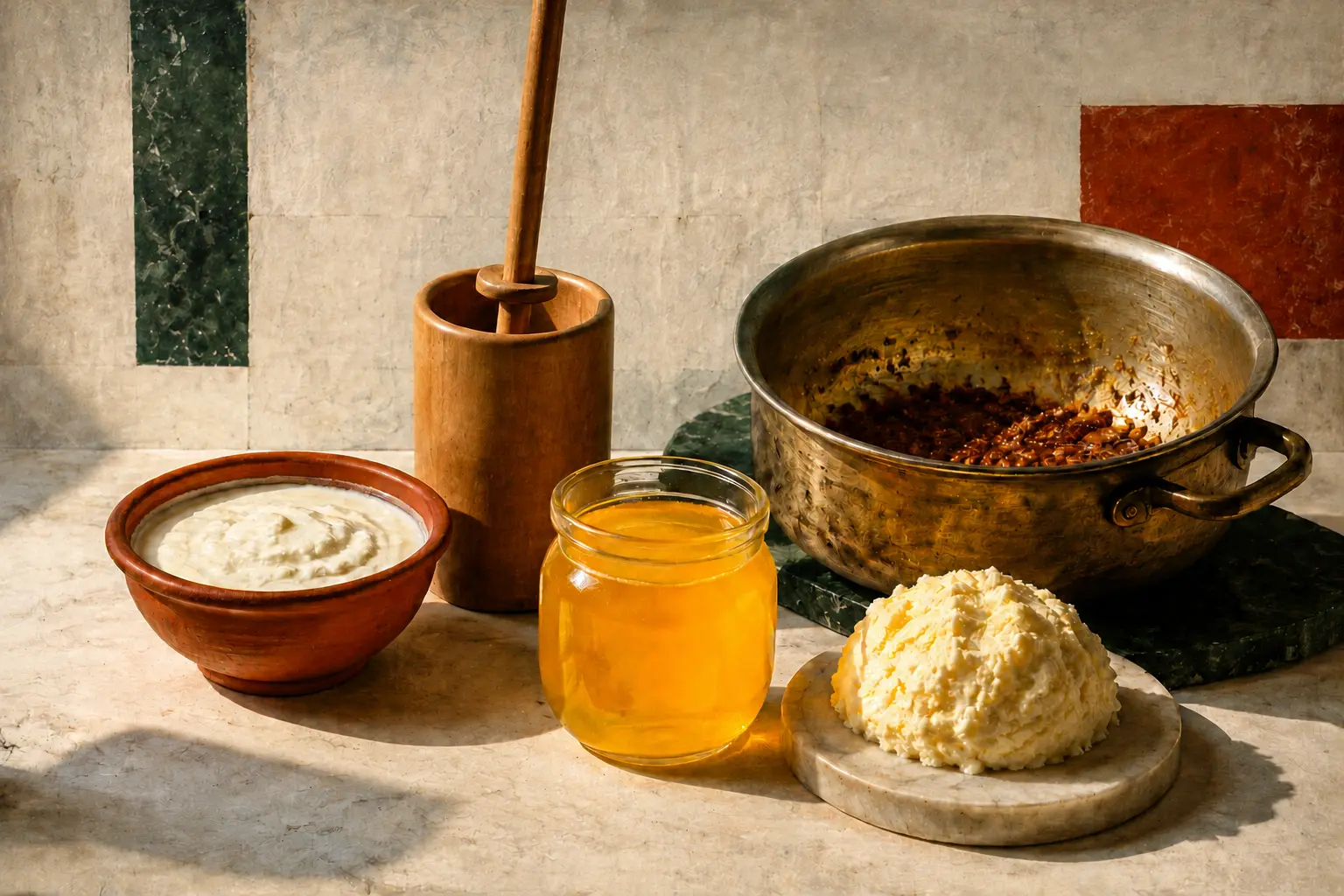
Ghee doesn’t start in a pan. It starts with cream that’s been made to age. You introduce a live culture such as dahi or yoghurt into fresh cream and let it sit—overnight, sometimes longer. It ferments. It sours gently. It ripens.
Then you churn it.
Now you’re holding white butter, not the bland sweet-cream butter most people are used to. This is cultured butter. It’s alive with the byproducts of fermentation—butyric acid, lactones and ketones. The same compounds that make it smell borderline offensive while it’s being made are exactly what give ghee its depth later: that almost fruity, lactic richness.
Only then do you cook it.
The milk solids brown, caramelise and settle at the bottom, after which the ghee is decanted off the top.
Wait until I start talking about the “bay leaf” in Indian recipes that is actually the leaf of the cinnamon tree. Or how, most of the time, when a recipe calls for cinnamon, it is actually cassia.
So no, ghee isn’t clarified butter. It just isn’t.