A Sunday Mock Exam
Just before my 10th standard exams, I used to go to extra tuition for three subjects that were considered “scoring,” which was the word adults used when they wanted to distinguish the subjects that could determine your future from the ones that merely made you a person. These were the mass-production tuition classes that were widespread during my time, early feeding lines into the NEET and JEE machinery, rooms full of children being trained to reproduce the right answer quickly enough and often enough that it would eventually look like knowledge. We wrote the same kinds of problems repeatedly, memorized the proper sequence of steps and learned that nearly everything important about us could be expressed as a percentage.
Before the final exams, the tuition class held mock papers so that students could practise being examined. One day, they announced an English mock on a Sunday, and anyone could take it, including students who had not enrolled in or paid for the English classes. I had nothing to gain from it. More importantly, I had nothing to lose. No teacher had spent months teaching me the approved method, no fees had been paid that now needed to justify themselves, and no one seemed particularly invested in what mark I received. I went because the paper was there and my Sunday was free.
I do not remember the essay topic. This feels appropriate now, although it probably would have horrified whoever designed the exam. The topic, which was supposed to be the important part, disappeared completely. What I remember is the freedom of having no strategy. I did not follow the standard introduction-body-conclusion bullshit. I was not trying to place a memorized quotation in the correct paragraph or ration my thoughts into the number of points the examiner expected. I went all in. Whatever the subject was, I followed it wherever my mind wanted to go, wrote with the confidence of someone whose future did not depend on the result, and finished the paper without thinking much more about it.
When the paper came back, the essay had received 6.5 out of 7, which in the mysterious arithmetic of Indian language papers is essentially full marks. Beside it was an excellent remark. I remember staring at the page and thinking, Crazy. I had ignored the structure, broken whatever rules I understood myself to be breaking and somehow hit it out of the park. I took the paper home and showed it to everyone because I thought I had discovered something extraordinary about myself.
The discovery was received with approximately the enthusiasm reserved for finding a decent tomato at the vegetable market. Yes, very good. Excellent. Now focus on mathematics and science.
The shrug mattered because I had not been doing well in school for the previous two years. I was on what I now understand as the downward side of a twice-exceptional AuDHD curve: bright enough to have hidden the difficulty for years, and by then exhausted enough that the hiding had stopped working. My marks were falling while the pressure around them was increasing, which meant that every disappointing result produced more of the same medicine—more classes, more repetition, more instructions, more hours spent forcing information into a mind that appeared increasingly unwilling to receive it. In the middle of that decline, the English mock felt like a breakthrough. Something had worked. Nobody was curious about what.
That may be the part I remember most clearly now. The mark itself was lovely, but the important evidence was not that I was “good at English.” It was that my mind had come alive when the stakes disappeared and the prescribed route was removed. I had been asked to write things over and over like a machine so that eventually I might mug them up, but repetition had only made the information more lifeless. Then, for one Sunday morning, I was given a subject and enough freedom to freestyle the shit out of it, and suddenly I could think.
Essayer
If only that child fucking knew what the word essay meant.
The English word comes from the French essai, from essayer: to try, to test, to attempt. I love that the word does not promise mastery. It does not say demonstration, proof or answer. It says: put something down and see what happens.
That is exactly what I had done in the mock exam without knowing I was doing it. I had not entered the room with a thesis. I had entered with a blank page and the peculiar relief of not being watched too closely. My mind had been allowed to move before it had been told where to arrive.
Michel de Montaigne gave the form its name in the sixteenth century after withdrawing from public life to a tower at his family château. Surrounded by books and quotations carved into the wooden beams above him, he wrote about friendship, grief, education, cruelty, idleness, smells, thumbs, death, his digestion and the unreliability of his own judgment. I recognize something in that range. My own writing rarely stays obediently inside its announced subject either. A piece may begin with food and become about care. It may begin with work and become about dignity. It may begin with a family habit and end somewhere near migration, memory or the ways people learn to love one another badly.
Montaigne revised his pieces for years, adding new thoughts without always removing the old contradictions. That, too, feels familiar. I do not write because I have arrived at a stable position and want to display it. I write because I can feel several positions inside me arguing at once. One part of me wants to make a clean claim; another remembers the exception; a third is distracted by some apparently irrelevant detail that turns out to be the thing the essay was actually about. The writing is where these parts stop shouting over one another and become visible.
Montaigne was not assembling a finished system of human nature. He was placing his changing mind beside the world and seeing what the encounter produced. When his first collection appeared in 1580, he called the pieces Essais. Attempts.
Francis Bacon established the form in English with ten short essays published in 1597. He acknowledged that although the term was new, the activity was ancient. Human beings had always used letters, meditations, arguments, fragments and private reflections to work their way towards knowledge. I think this is why the form feels so natural to me. My mind does not usually receive knowledge as a clean package. It gathers it through association. A sentence from a book collides with something someone said at dinner. A memory changes the meaning of a fact. A question I thought was intellectual turns out to be personal. The essay gives all of these things permission to occupy the same room.
This was the obscenity hidden inside my education. The calculus they wanted me to repeat, the Cartesian reasoning presented as if it had descended from the heavens already typeset, the scientific laws and mathematical proofs made to look like perfect monuments of certainty—all of them had come from people attempting, failing, writing, revising, arguing, testing and trying again. The knowledge being hammered into my head was the residue of somebody else’s intellectual freedom, but it was being taught to me without the freedom that had made it possible. I was shown the answer after every trace of the struggle had been cleaned from it and then judged on how faithfully I could reproduce the corpse.
Perhaps this is why schools managed to make the essay itself feel dead. They took a form born from uncertainty and converted it into an architecture of certainty: introduction, thesis, three supporting paragraphs, conclusion. Say what you will say, say it, and then say what you said. I was expected to know before beginning, even though beginning was the only way I ever found out what I knew.
Structure is not the enemy. I need structure more than I once admitted. Without some shape, my attention can scatter into ten beautiful directions and never return. But the structure has to emerge from the thinking rather than replace it. When I write about hospitality, for example, I am not simply arranging examples beneath a pre-existing argument. I am trying to understand why feeding someone can feel like love in one context and obligation in another, why generosity can contain power, why a kitchen can become a site of memory and why the smallest domestic rituals can carry the weight of an entire history. The form has to be flexible enough to let the question become more complicated as I approach it.
On that Sunday, without knowing any of this, I had accidentally returned the essay to its original purpose. I had attempted. I had not reproduced a conclusion rehearsed elsewhere. I had used the page to find out what I could think, and the examiner, perhaps sensing the unfamiliar appearance of an actual person inside an exam booklet, gave me 6.5 out of 7.
A Human Exercise
I used to think that writing about ordinary things required a justification. If I was going to spend pages on a meal, a family habit, a piece of work or the way people behaved around a table, I felt I had to prove that the subject was important before I was allowed to look at it closely. I carried the schoolroom suspicion that attention had to be earned by drama.
But the subjects that keep returning in my writing are ordinary precisely because they are where I can see people most clearly. Food reveals who is expected to serve and who is allowed to arrive hungry. Work reveals what kinds of exhaustion are considered respectable. Hospitality reveals the difference between generosity and performance. Family stories reveal which facts are preserved, which are softened and which are quietly removed. I do not need a catastrophe to find human nature. I need to notice what everyone has stopped noticing.
Creative nonfiction is often explained by saying what it is not. Fiction is invented; nonfiction is true. This distinction tells us where the material came from but very little about what the writing does. A textbook is nonfiction. So is an instruction manual. Neither is what I mean when I speak of the essay as a human exercise.
For me, creative nonfiction begins when a fact refuses to remain only a fact. Someone cooks a meal, and I start wondering what they were taught about care. Someone makes a joke, and I notice the hierarchy hidden inside the laughter. A person describes an ordinary day, and I hear the shape of a life they have never had to explain because everyone around them already understands it. The essay begins in that pressure between what happened and what it might mean.
The writing is not simply transporting information from my brain into someone else’s. It is showing what happens when something real passes through my particular consciousness—what I notice, what I resist, what memory interrupts, why one detail begins to glow while another disappears. When I write about a domestic scene, I am never only writing about the scene. I am also writing about the version of myself who learned to interpret that scene, the assumptions I brought to it and the things I was too young, too angry or too distracted to understand at the time.
The essay is sometimes described as a mind at work, which sounds modest until I think about how rarely we are allowed to witness such a thing honestly. Most public arguments arrive after doubt has been edited out. Most expertise is performed through confidence. Even in ordinary conversation, I often feel pressure to produce a position before I have had time to discover what I actually think. The essay gives me a place where I can remain uncertain without becoming vague.
That matters because my first interpretation is rarely my deepest one. I may begin by thinking I am angry at a person, then realize I am angry at a system that taught both of us to behave that way. I may begin by defending a value and discover that I have been using the value to protect my own comfort. I may begin with a story about care and end up asking whether care that is demanded, gendered or invisible can still be called generosity. The essay lets me follow these reversals instead of hiding them.
This is also why real life is sufficient material. More than sufficient. The ordinary is not empty; it is compressed. A small interaction can contain a family’s entire theory of responsibility. A repeated phrase can reveal what a person believes they are entitled to. The way a meal is prepared can carry class, migration, religion, gender and memory without announcing any of them. My job is not to inflate these details until they appear important. It is to stay with them long enough to discover the importance already inside them.
A good essay does not pretend that the writer is a neutral observer. Two people can watch the same family gathering and leave with different essays because attention carries a biography. What I notice has been shaped by what I have loved, feared, endured, misunderstood and spent years trying not to remember. If I keep returning to questions of care, work, food and belonging, that repetition is not accidental. It is the outline of my mind appearing through the subjects.
The writer on the page is still not the whole person. The “I” in an essay is selected. It is the part of me that belongs to the inquiry, placed under a brighter light. When I write about a memory, I am not claiming to have recovered the entire past. I am choosing the detail that still has heat in it and asking why. When I write about work, I am not presenting a complete account of my professional life. I am examining the moment when my stated values collided with what I actually did.
This distance is not dishonesty. It is what makes honesty bearable. I can examine my vanity, tenderness, resentment, confusion or contradiction without turning the work into a total confession. I can admit that I wanted to be seen as generous, principled or perceptive and then look at the places where I was none of those things. The essay gives me intimacy with boundaries. It lets me tell the truth without pretending that one piece of writing can contain an entire life.
The Page Is Rude
For the reader, the essay reveals a mind at work. For the writer, the essay is the work that makes the mind reveal itself.
Inside my head, an idea can survive for years on confidence and good lighting. It is surrounded by every memory and association that produced it, so the missing connections are quietly supplied before I can notice they are missing. I can move from one point to another without explaining the distance. I can feel that I understand something because I recognize its vocabulary, or mistake the emotional force of a belief for evidence that the belief is coherent. Thought is generous to itself in private.
The page is rude.
It does not care what I meant. It has only what I managed to say. This is why I often discover the real subject of an essay only after I have written several pages about the wrong one. I may think I am writing about a meal, but the draft keeps returning to who was allowed to rest. I may think I am writing about a workplace disagreement, but every paragraph bends towards the question of recognition. I may think I am writing about a family story, but the sentence that refuses to leave me alone is about what we inherit without being told.
The page exposes these obsessions because it does not let me hide behind intention. One sentence must lead to another. A claim must show where it came from. An emotion must decide whether it is evidence, instinct or simply an emotion. If I say that something is unfair, the page asks: unfair to whom? If I say that someone was kind, it asks what their kindness cost and who had to receive it. If I say that I understand another person, it asks whether I have actually listened or merely found a version of them that fits my argument.
Writing forces the scattered, simultaneous activity of my mind into some kind of sequence, and in that sequence the weaknesses become visible. A grand conviction may shrink into a mood. A paragraph that refuses to work may reveal that the problem is not language but logic. Something I thought was a minor observation may turn out to contain the only question worth pursuing.
This is the physical miracle of writing for me. Even when I type, something moves from the private weather of my mind into a world where it has edges. I can stand beside it. I can question the thought without feeling that I am attacking my entire identity, revise it without treating change as betrayal and discard it without having to defend the person who first believed it.
That distance is especially important when I am writing about myself. Inside my head, shame can feel like a verdict. On the page, it becomes material. I can look at the child who was desperate to be understood, the adult who became defensive before anyone had accused them and the person who sometimes confuses being right with being safe. I do not have to excuse these selves, but I also do not have to remain trapped inside their first explanations. Writing lets me meet them as characters in the history of my thinking.
The learning occurs through this confrontation. To explain something in my own words, I have to make the knowledge mine. I have to choose what belongs, determine how the parts connect and discover whether I understand the idea or have only become familiar with somebody else’s explanation. This is why research changes when I am writing an essay. I am not collecting facts to decorate an argument I already possess. I am looking for the fact that will force the argument to become more honest.
When I write about food, I may begin with taste and end up reading about labour, migration or memory. When I write about work, I may begin with productivity and end up asking what kind of person productivity has required me to become. When I write about family, I may begin with affection and discover the resentment that affection had been covering. The research matters because it gives my private intuitions something to push against. It prevents the essay from becoming merely a beautiful arrangement of my own feelings.
Every difficult passage points towards something unresolved, and every revision of the sentence becomes a possible revision of the understanding. I am not recording thought after it has happened. I am using language to make more rigorous thought possible.
This is why an essay can matter even if nobody reads it. It can remain unpublished, never be revisited or vanish completely after it is written, and the process will still have altered me. To remain with one question, investigate what the first instinct ignored, organize the findings and express them without borrowing the shelter of somebody else’s language is to exercise the mind deeply.
Perfectionism misunderstands this process because it demands that the thought be complete before the writing begins. I know that demand intimately. It is the voice that tells me I need one more book, one more fact, one more perfect opening before I am allowed to start. But if I had to know exactly what I meant before putting down the first sentence, there would be little reason to write the essay at all.
The form gives me permission to be rigorous without pretending to be final. It lets me investigate carefully while accepting that the result may remain partial, contain errors or become something I later outgrow. An essay is not honest because it is flawless. It is honest because the attempt has been taken seriously.
The Way My Mind Learns
I understand that Sunday mock exam differently now because I understand my mind differently. It does not move obediently from A to B merely because a teacher has announced that B is where marks are kept. It collects fragments, notices relationships, wanders towards something that appears irrelevant and sometimes returns carrying the missing piece. Under compulsion, that movement can look like distraction. Given a real question and enough freedom, the same movement becomes inquiry.
I can see this pattern in almost everything I write. I rarely begin with a fully formed argument. I begin with a snag. A phrase someone used. A meal that felt more complicated than it should have. A work problem that made me angry for reasons I could not immediately explain. A memory that returned with one detail sharpened and everything else blurred. My mind does not ask, “What is the thesis?” It asks, “Why is this still bothering me?”
The essay gives that question somewhere to go. I can begin with a detail too small to announce itself as a subject and follow the discomfort or fascination it produces. Food, work, family, faith, music, memory, migration, hospitality and the ways people care for or misunderstand one another begin touching each other inside the writing. I do not need to know the larger argument when I start. I need only to know that something has caught against my attention and deserves to be examined rather than dismissed.
This is why my essays often feel, to me, like acts of excavation. I start with the visible thing and keep digging until I reach the buried structure beneath it. A conversation about cooking becomes a question about who is expected to anticipate other people’s needs. A reflection on work becomes a question about whether usefulness has become my substitute for worth. A piece about belonging becomes an examination of all the ways I have learned to make myself legible to other people.
Writing then turns observation into a form of self-reflection. Before the essay, the thought is private weather: it passes through me, changes the temperature of a day and eventually dissolves. Once written, it occupies space. I can return to it. Someone else can encounter it. It can contradict something I write later or reveal that subjects I believed were separate have grown from the same unresolved concern.
As the essays accumulate, they become a conversation about the mind that produced them. I can see what I repeatedly notice, what I cannot reconcile, what I love, what I fear and what kind of world I keep hoping to find. I can also see the stories I keep telling about myself. Sometimes the writing reveals that I have been using complexity as a way to avoid a simple truth. Sometimes it reveals that what I called confusion was actually grief. Sometimes it shows me that I have been asking other people to offer a kind of care I have not yet learned to offer myself.
That conversation continues because I continue changing. An old essay can embarrass me, reassure me or argue with me. I may discover that I no longer believe its conclusion, but disagreement does not make the original attempt worthless. It gives me evidence of movement. The body of work becomes a history of attention rather than a museum of permanent opinions.
When I return to an old piece, I meet a previous self who was blind to things I can now see but may also have understood something I have since neglected. The younger version of me may have been less articulate but more willing to notice. The older version may have more context but more defences. Writing lets these selves speak to one another without requiring either one to win.
This is where writing becomes a matter of alignment. Values can remain flattering abstractions while they are kept inside the head. On the page, they become claims with consequences. I can place what I say I believe beside the way I work, cook, lead, listen, love and move through the world, and I can see the distance between them.
If I say I value care, the essay asks whether I notice the invisible labour that makes care possible. If I say I value freedom, it asks whether I make room for other people’s choices when they inconvenience me. If I say I value honesty, it asks whether I want the truth or merely the version of the truth that confirms my self-image. These questions are uncomfortable because they turn writing from self-expression into accountability.
The essay cannot make my life perfectly consistent, nor would I trust one that claimed it could. Human beings are not arguments waiting to be made airtight. But writing gives me a visible point from which to adjust. It asks whether the life I am living still recognizes the things I insist matter.
Sharing the essay extends this private alignment into conversation. I cannot place my mind whole inside another person, but I can leave behind the route it took. A reader may follow, disagree, recognize themselves somewhere along the path or notice what I failed to see. Sometimes a reader’s response shows me that the thing I thought was most personal is widely shared. Sometimes it shows me that I have mistaken my own experience for a universal one. Both are forms of learning.
The purpose is not agreement. The purpose is contact. For a few pages, two minds can meet around an attempt to understand something real, and the private work of observation becomes part of our common effort to know what it means to be human.
Better, and More
In 1880, Vincent van Gogh wrote to his brother Theo that one must love with “a high, serious intimate sympathy,” with will and with intelligence, and “always seek to know more thoroughly, better, and more.” He was writing about love, faith, art and the knowledge that becomes possible when attention is not casual but devoted. To know something deeply, in his understanding, was inseparable from caring enough to remain with it.
That is what the essay asks of me. To look closely is not enough; I must care enough to continue looking after the first explanation has satisfied everyone else. To care is not enough; I must submit that affection, anger or fascination to intelligence. To know something once is not enough; I must be willing to return, doubt, revise and attempt to know it better. Curiosity without discipline becomes trivia. Intelligence without intimacy becomes sterile. The essay brings the two together.
Perhaps this is what it means to live fervently: not to perform a constant blaze of emotion, but to refuse a shallow relationship with the world. To notice what is routinely ignored. To love seriously. To remain vulnerable to correction. To pursue understanding even when it complicates the story I would prefer to tell about myself. The essay is the record of that pursuit, but it is also the pursuit itself—one human mind reaching towards life, giving its confusion a shape and offering that shape to another.
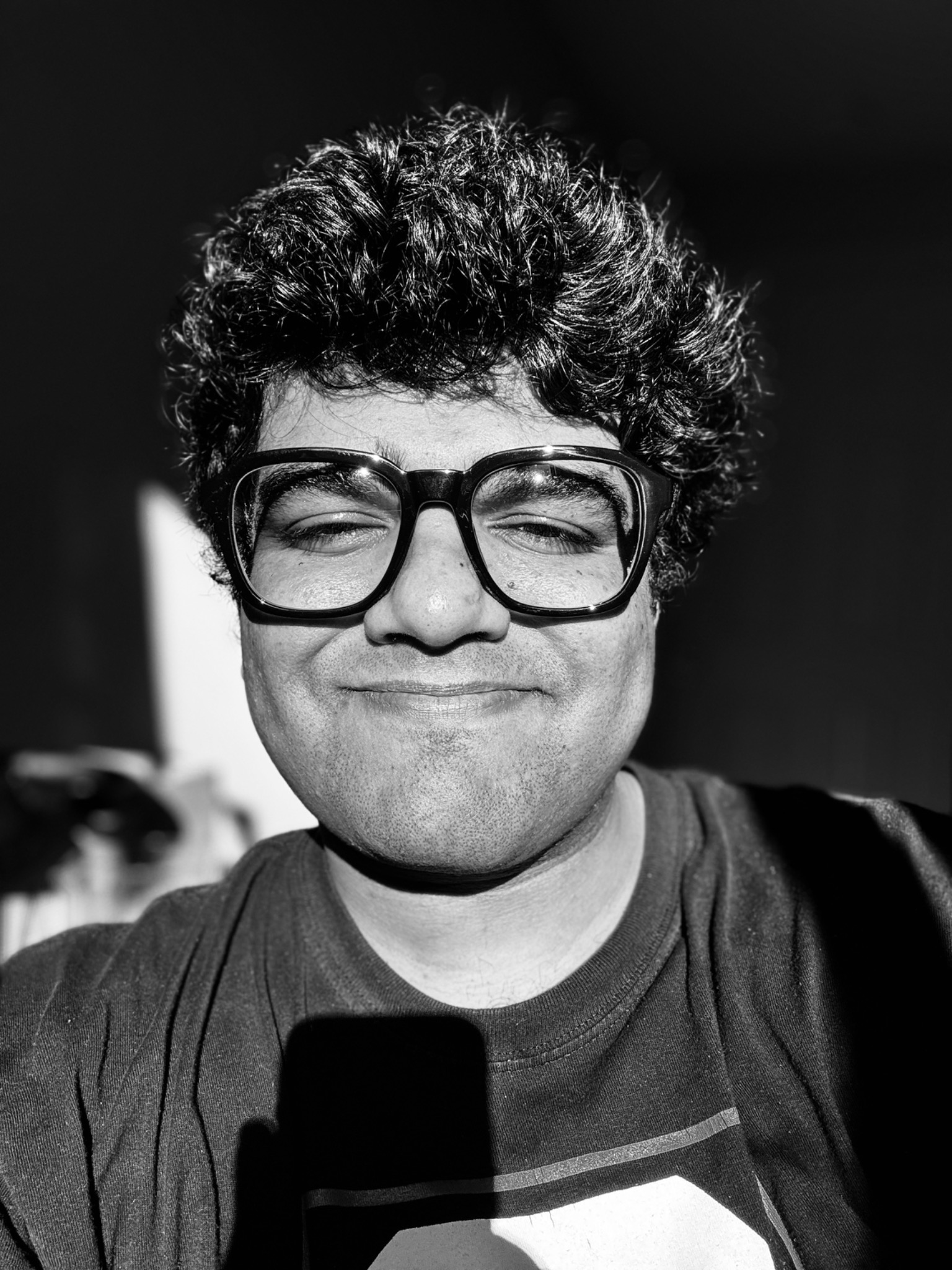
I think again about the child sitting in a tuition classroom on a Sunday, writing an essay whose subject he would forget and receiving a mark he would remember for the rest of his life. He thought the discovery was that he could write well. The adults around him thought it was pleasant but strategically irrelevant. What none of us understood was that he had stumbled upon a method for learning that matched the natural movement of his mind. For once, he had not been asked to reproduce somebody else’s finished understanding. He had been permitted to attempt his own.
I wish he had known that sooner. I wish somebody had looked at the falling marks, then at the 6.5 out of 7, and become curious about the distance between them. I wish somebody had told him that the freedom he felt was not indiscipline, that wandering could become method, that writing was not what one did after thinking but one of the most powerful ways a person could think. He had not failed to learn. He had been denied his language for learning.
I write essays now because the world continually exceeds what I understand, and curiosity will not let me leave it there. Every piece is an attempt to close that distance while knowing it can never be closed completely. That impossibility does not make the endeavour futile. It makes the essay one of the most profound and beautiful forms of human curiosity: a place where attention becomes devotion, thought becomes physical, and the desire to understand becomes an active way of living.
To live fervently. To know more thoroughly, better, and more.
That child knows now.