
Sameer is eight years old.
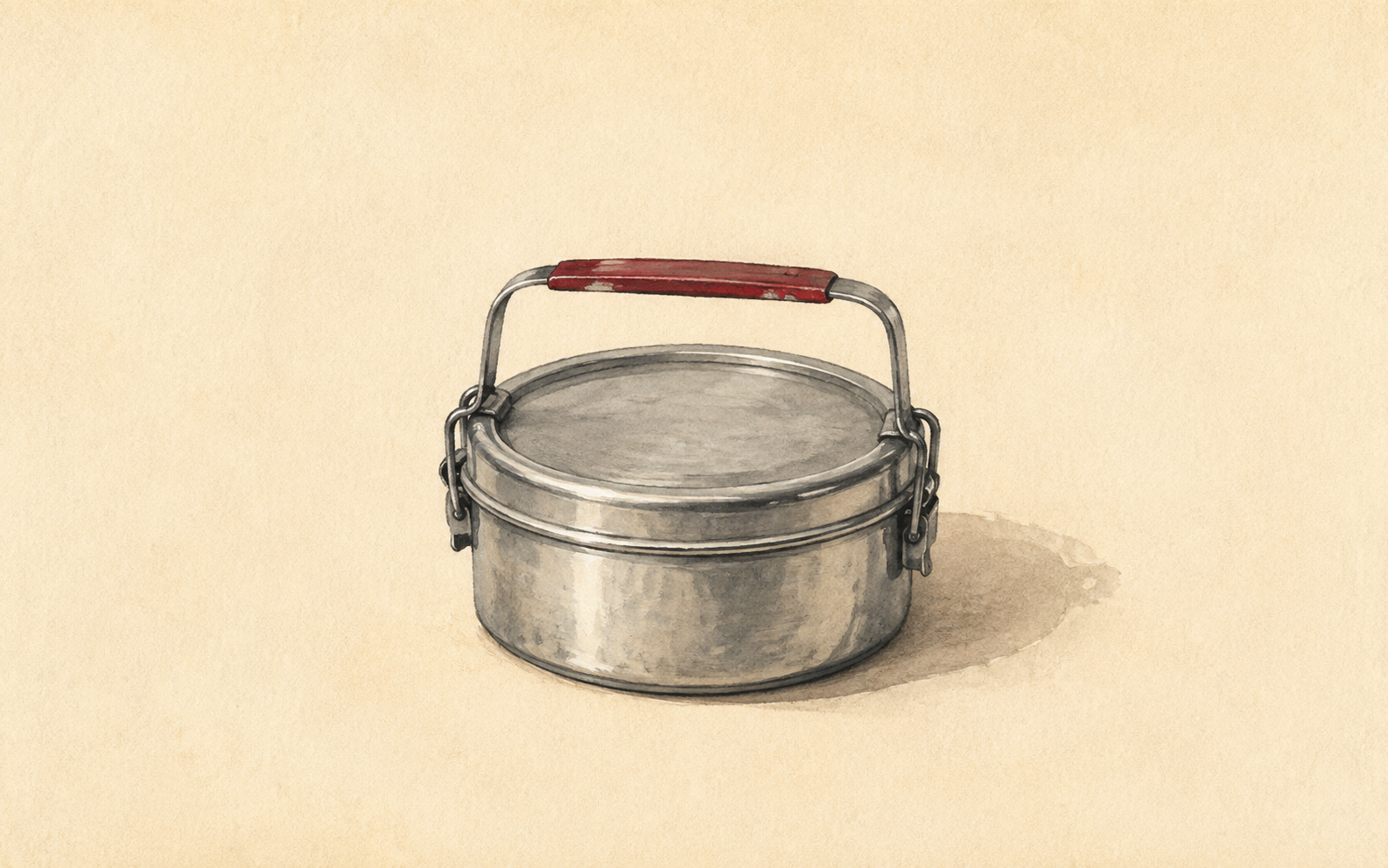
At lunchtime, his teacher asks everyone to open their tiffins.
She walks between the desks, inspecting them one by one, until she reaches Sameer.
Maggi.
Her face changes.
“Again?”
Sameer looks down.
She tells him this is not healthy food. That children need proper nutrition. Vegetables. Protein. Home-cooked meals.
Then comes the sentence that has very little to do with nutrition.
“What does your mother do all day?”
A few children laugh.
The teacher tells him to go home and tell his mother that she cannot keep sending him to school with things like this. Parents have responsibilities. Children need to be looked after properly.
Sameer closes his tiffin.
Cut to his house that morning.
His father has already left for work.
His mother is getting ready for her own full-time job while simultaneously looking for Sameer’s missing notebook, ironing the collar of his uniform, packing her own lunch and checking whether the gas has been turned off.
She had intended to make something else.
There wasn’t enough time.
So she boiled water, cooked a packet of Maggi, put it into his tiffin and made sure her child did not go to school hungry.
It was not an act of neglect.
It was an act of triage.
And for one morning, Maggi won.
Jay is sitting two desks away.
His turn comes.
Two rotis. A little achaar.
The teacher looks inside.
“That’s it?”
Jay nods.
“This won’t fill your stomach.”
Perhaps she is genuinely concerned.
Then, almost as an afterthought, she reminds him that last month’s school fees are still pending.
In front of everyone.
Jay knows this already.
Children always know more about money than adults think they do.
Cut to his house.
His father works as a clerk in an office. His mother takes tailoring orders from neighbours and spends evenings bent over a sewing machine.
There are school fees, rent, electricity, groceries, uniforms, notebooks, transport and whatever new expense adulthood has invented that month.
His parents could have sent him somewhere cheaper.
They didn’t.
They are stretching themselves because this is a “good school.”
English-medium.
Good teachers.
Better opportunities.
The sort of school parents like Jay’s send their children to because they have been told, quite correctly, that education might allow their children to have an easier life than theirs.
That morning there was atta.
There was achaar.
There were two rotis.
So Jay went to school with two rotis and achaar.
His parents managed, once again, to feed him and educate him.
And somehow the school found a way to make him ashamed of both.
Then there is Hameed.
His tiffin opens and the smell immediately travels across the classroom.
Chicken biryani.
Three keema samosas wrapped separately.
There had been a dawat at his house the night before.
His mother packed some of the leftovers for school.
The samosas are not really for Hameed. They are for his friends.
Sameer gets one.
Jay gets another.
The third is broken into pieces because several other hands have appeared, as hands mysteriously do whenever someone opens a good tiffin.
The children are delighted.
The teacher is less impressed.
“Yeh sab kyun leke aate ho school mein?”
Why do you bring all this to school?
Hameed does not really know how to answer.
It is homemade.
It has protein.
It is filling.
It prevented food from being wasted.
It came from a family meal.
He shared it with his classmates.
Sameer and Jay, incidentally, both eat meat. They are far more interested in the samosa than whatever cultural problem the adults have decided the samosa represents.
But well.
Apparently this tiffin is wrong too.
And that is when the whole thing begins to reveal itself.
Sameer’s lunch was too processed.
Jay’s was too poor.
Hameed’s was too much.
One mother did not cook enough.
Another family could not provide enough.
A third family packed the wrong kind of abundance.
There is, apparently, a perfect school tiffin somewhere between Maggi, poverty and biryani, and Indian parents must discover it before 7:15 every morning or risk having their domestic competence reviewed by a schoolteacher in front of thirty eight-year-olds.
The Lunchbox Inspection
Videos of teachers inspecting children’s tiffins have become remarkably easy to find online.
One viral video earlier this year showed a teacher moving from child to child, opening lunchboxes containing noodles, chips, cake, fruit and roti-sabzi and commenting on what parents had packed. Another, circulated this August, showed a teacher discovering that almost every child had brought some variation of aloo and roti or aloo paratha, which then became fuel for an online argument about Indian diets and protein. (India Today; India Today)
And to be clear, the nutritional question is not ridiculous.
Children should eat well.
A school explaining nutrition to students is good.
A school sending useful guidance to parents is good.
Teaching children what protein, fibre, fruits and vegetables do for their bodies is good.
If a child is routinely coming to school hungry, a teacher noticing that may be enormously important.
The problem begins when education becomes inspection.
And inspection becomes judgement.
And judgement becomes humiliation.
Because a tiffin is not merely a collection of macronutrients.
It contains money.
It contains time.
It contains caste and religion and region and family habits.
It contains leftovers.
It contains whether somebody worked a night shift.
It contains whether vegetables were expensive that week.
It contains whether the gas cylinder ran out.
It contains whether the mother was sick.
It contains whether the child is fussy.
It contains whether the family had guests yesterday.
Sometimes it contains what was left in the kitchen at 7:02 in the morning.
You cannot open that box and pretend you are looking only at carbohydrates.
The Teacher Is Not Just Another Adult
There is another reason these videos disturb me.
The person opening the tiffin is not another eight-year-old.
It is the teacher.
Indian schools have historically given teachers an extraordinary amount of social authority.
For many children, particularly young ones, the teacher is not simply an employee of an educational institution.
The teacher can punish you.
The teacher can praise you.
The teacher speaks to your parents.
The teacher decides whether your answer is right.
The teacher writes remarks in your diary.
The teacher can make thirty children laugh at you with a single sentence.
An eight-year-old cannot meaningfully contest that authority.
He cannot say:
“My mother works nine hours a day.”
He cannot say:
“Our electricity bill was unexpectedly high this month.”
He cannot say:
“My father has not been paid yet.”
He cannot say:
“This is what people in my family eat.”
He cannot say:
“With respect, ma’am, perhaps my mother’s labour arrangements are outside the scope of your professional responsibilities.”
He is eight.
So he lowers his head.
And everyone calls it discipline.
This is not some sentimental objection to teachers correcting children either. India’s own child-protection framework recognises the difference. Section 17 of the Right to Education Act prohibits physical punishment and mental harassment, while the National Commission for Protection of Child Rights has specifically described humiliating sarcasm, derogatory remarks and ridiculing children over their background, status or parental occupation as forms of mental harassment. Its guidance even identifies discrimination linked to non-payment of fees.
In other words, we already understand, at least on paper, that humiliation is not pedagogy.
Our cultural instincts have not entirely caught up.
Somebody Must Be Blamed
What interests me almost more than the videos are the comments underneath them.
People love this stuff.
A teacher opens a child’s lunchbox and suddenly thousands of adults become nutritionists, economists and parenting experts.
Lazy parents.
What kind of mother sends this?
Parents nowadays don’t care.
We used to get proper food.
There is an almost erotic satisfaction in finding someone beneath us to discipline.
And the mother is usually the easiest target.
Nobody asks what time she left for work.
Nobody asks whether the father cooks.
Nobody asks about household income.
Nobody asks how much unpaid labour already went into getting that child dressed, fed and delivered to school.
Nobody asks whether a society that cares this deeply about child nutrition might perhaps provide children with nutritious food rather than conducting forensic analysis of what their mothers packed.
No.
That would require institutions.
Budgets.
School meals.
Labour protections.
Public health.
Maybe even compassion.
Much easier to find a woman who put Maggi into a Spider-Man tiffin box and prosecute her for the decline of civilisation.
This instinct extends far beyond food.
India has developed an extraordinary ability to translate structural problems into individual moral failures.
Someone is poor because they did not work hard enough.
A child struggles because the parents were careless.
A woman is exhausted because she cannot “manage the house.”
A family cannot afford something because they did not plan properly.
A student cannot pay fees on time and somehow the overdue payment becomes a character defect that can be announced in a classroom.
We are remarkably uncomfortable discussing power horizontally.
But give someone a person below them in a hierarchy and suddenly everyone knows exactly how society should be run.
The manager lectures the worker.
The housing society lectures the domestic help.
The customer lectures the waiter.
The elder lectures the younger.
The teacher lectures the child.
And because we grew up receiving the same treatment, we often defend it.
Our teachers were much stricter.
We turned out fine.
Perhaps.
But “it happened to me too” is an explanation for why a behaviour survives. It is not an argument for why it should.
Nutrition Without Dignity Is Not Education
There is a version of the tiffin conversation worth having.
Children in India do need better nutritional literacy.
Parents can benefit from inexpensive ideas for more balanced lunches.
Schools can teach children how food works without turning individual meals into morality plays.
A teacher could explain that dal, chana, eggs, curd, peanuts or other affordable foods can add protein.
A school could circulate inexpensive tiffin suggestions.
It could speak privately with a family if a genuine concern repeatedly appears.
It could make sure a child who arrives without enough food gets fed.
It could teach.
That is, after all, the profession.
What it should not do is place a child’s lunch on trial.
There is an especially cruel absurdity in making children ashamed of food.
Lunch break should be one of the safest moments of the school day.
Tiffins are traded.
Mothers’ recipes are compared.
One child brings something nobody else has seen before.
Someone swaps dhokla for idli.
Someone steals half a paratha.
The rich kid discovers that the supposedly boring achaar in somebody else’s steel dabba is magnificent.
Children can encounter class, religion, region and culture through food with an ease adults spend decades trying to recreate at diversity conferences.
Then an adult arrives and teaches them which foods should embarrass them.
What an astonishing waste.
Sameer does not need to learn that Maggi is shameful.
He needs to learn that Maggi is something he can enjoy sometimes and that his body also needs other things.
Jay does not need to learn that roti and achaar expose his family’s finances.
He needs lunch.
Hameed does not need to learn that biryani and keema samosas are somehow inappropriate because they make an adult uncomfortable.
He should probably just remember to bring more samosas tomorrow.
Most importantly, none of them needs to learn that the contents of a lunchbox determine the worth of the person who packed it.
Because a tiffin is not a report card on motherhood.
It is not a declaration of class.
It is not proof of parental virtue.
It is one meal on one day.
Sometimes lovingly planned.
Sometimes nutritionally impeccable.
Sometimes leftovers from last night’s dawat.
Sometimes two rotis and achaar.
Sometimes Maggi cooked by a mother staring at the clock.
Before a teacher opens one in front of thirty children, perhaps she should remember what she is actually opening.
Not merely a lunchbox.
The front door of someone’s home.